What are Responsive Search Ads (RSAs) & How Do They Work?
What are Responsive Search Ads (RSAs) & How Do They Work?
Responsive Search Ads
Responsive Search Ads
Responsive Search Ads
Responsive Search Ads let you create adaptable ads that show the most relevant messages to your audience. Google Ads tests different headline and description combinations to find the ones that perform best.
Responsive Search Ads let you create adaptable ads that show the most relevant messages to your audience. Google Ads tests different headline and description combinations to find the ones that perform best.

Table of Content
Maximize Your Google Ad Results with Responsive Search Ads







4.9/5 Ratings!

Anil J.
Anil J.
8 Min Read
8 Min Read
Oct 30, 2025
Oct 30, 2025
What are Responsive Search Ads?
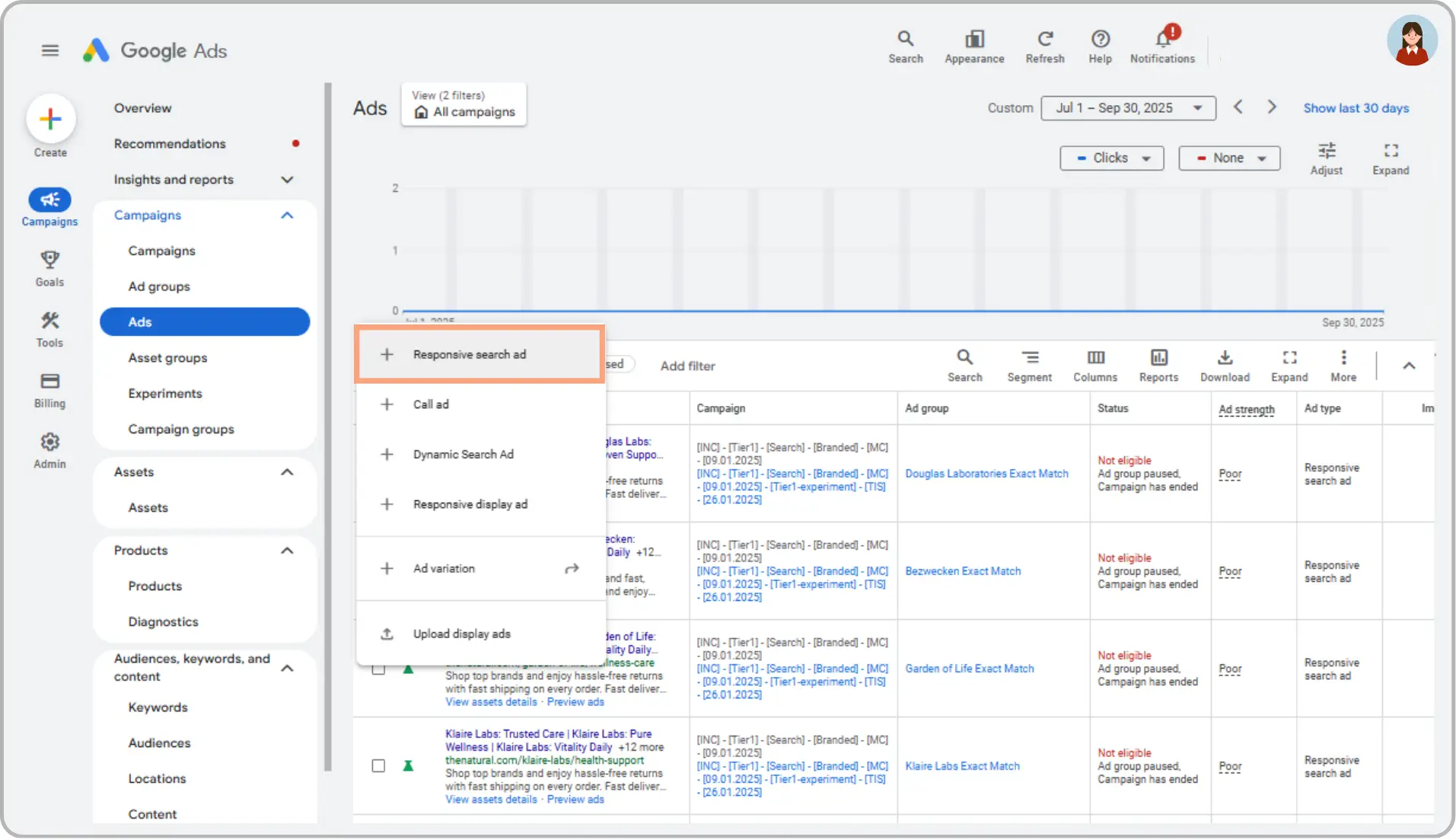
How Responsive Search Ads Works?
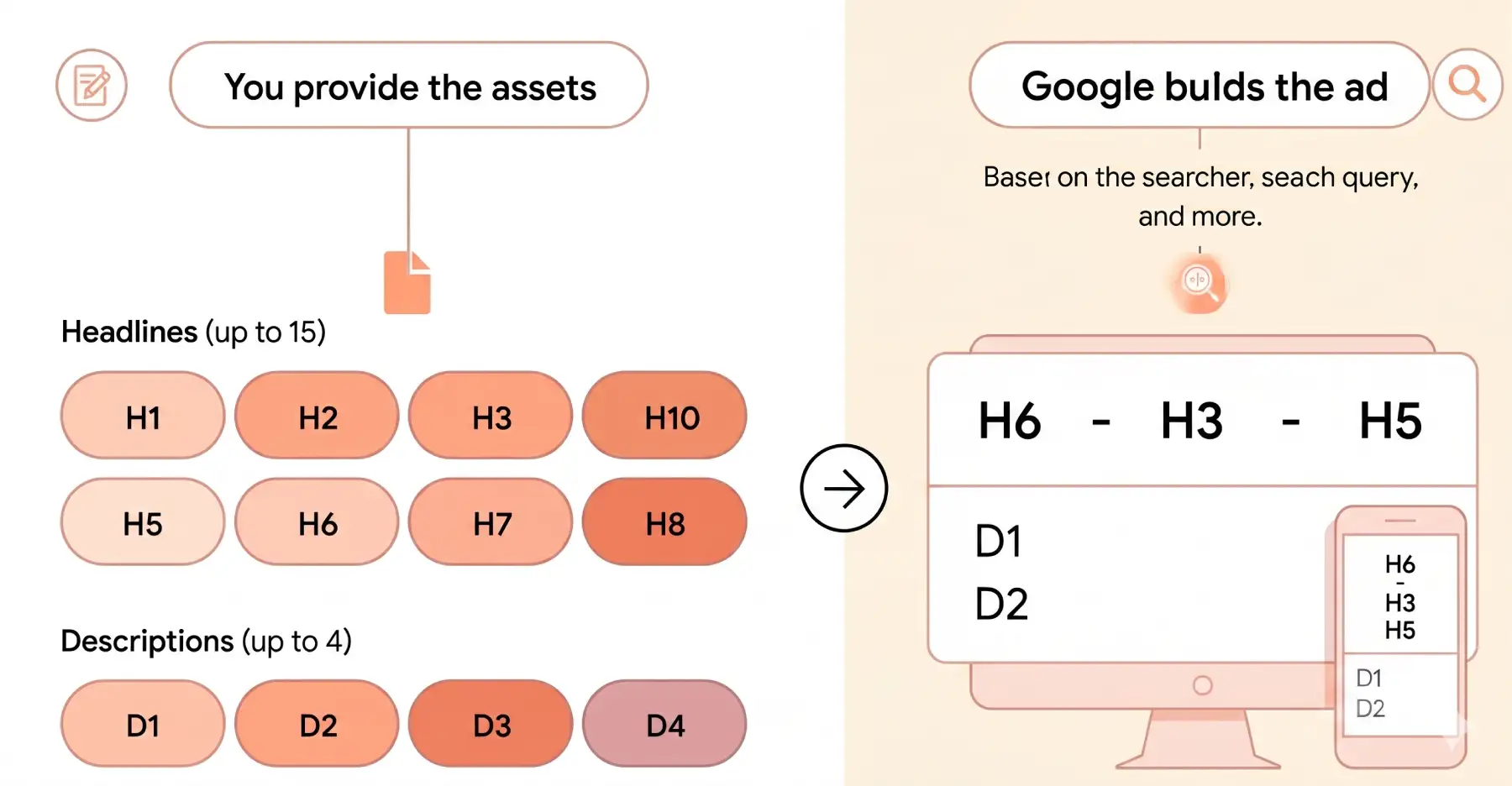
When setting up an RSA, you can:
Give up to 15 headlines (up to 30 characters each).
Give up to 4 descriptions (maximum 90 characters each).
Google then mixes these items into ads that can have up to 3 headlines and 2 descriptions at the same time. Over time, it learns which groupings get more clicks or click-through rate (CTR) and more people taking action. It keeps getting better at this to help you reach your goals.
When setting up an RSA, you can:
Give up to 15 headlines (up to 30 characters each).
Give up to 4 descriptions (maximum 90 characters each).
Google then mixes these items into ads that can have up to 3 headlines and 2 descriptions at the same time. Over time, it learns which groupings get more clicks or click-through rate (CTR) and more people taking action. It keeps getting better at this to help you reach your goals.
Setting Up RSAs Effectively
To get the most out of RSAs, you should:
Include different headlines. Cover product features, top selling points, brand benefits, and calls to action (CTA).
Use keywords naturally in multiple headlines.
Write descriptions with different focuses like trust signals, promotions, or benefits.
Do not send the same messages again and again so the system gets the most variety to check.
To get the most out of RSAs, you should:
Include different headlines. Cover product features, top selling points, brand benefits, and calls to action (CTA).
Use keywords naturally in multiple headlines.
Write descriptions with different focuses like trust signals, promotions, or benefits.
Do not send the same messages again and again so the system gets the most variety to check.
Why Responsive Search Ads Matter in Today's Online Ads?
Responsive Search Ads, are now important for anyone doing digital advertising. They let you use a mix of headlines and text, which shows people more choices. This way, the ads can fit what someone is searching for on Google. RSAs also help companies reach a wider audience because the ads automatically adapt to match what users are searching for. In the end, they make it easier to get your message out and make your ad work better.
RSAs are now the main ad style on Google. They stand out for three big reasons:
Personalization at Scale: They change messages to fit what each person is looking for.
More Auction Opportunities: A mix of different headlines lets your ad show up for more search words.
Reduced Manual Work: Advertisers do not have to spend as much time on A/B testing because Google's AI does the experiments for them.
RSAs are the way that Google is putting AI-first advertising automation at the front. This helps people who advertise to reach users in a smarter way. They can put their time and work into planning instead of spending it on fixing or changing ads by hand.
Responsive Search Ads, are now important for anyone doing digital advertising. They let you use a mix of headlines and text, which shows people more choices. This way, the ads can fit what someone is searching for on Google. RSAs also help companies reach a wider audience because the ads automatically adapt to match what users are searching for. In the end, they make it easier to get your message out and make your ad work better.
RSAs are now the main ad style on Google. They stand out for three big reasons:
Personalization at Scale: They change messages to fit what each person is looking for.
More Auction Opportunities: A mix of different headlines lets your ad show up for more search words.
Reduced Manual Work: Advertisers do not have to spend as much time on A/B testing because Google's AI does the experiments for them.
RSAs are the way that Google is putting AI-first advertising automation at the front. This helps people who advertise to reach users in a smarter way. They can put their time and work into planning instead of spending it on fixing or changing ads by hand.
Aspect
Aspect
Aspect
Aspect
Badly Structured RSAs
Badly Structured RSAs
Badly Structured RSAs
Badly Structured RSAs
Well-Structured RSAs
Well-Structured RSAs
Well-Structured RSAs
Well-Structured RSAs
Headlines
Headlines
Headlines
Headlines
Repetitive or similar headlines with little variation
Repetitive or similar headlines with little variation
Repetitive or similar headlines with little variation
Repetitive or similar headlines with little variation
Diverse, unique headlines covering different angles (benefits, CTAs, USPs)
Diverse, unique headlines covering different angles (benefits, CTAs, USPs)
Diverse, unique headlines covering different angles (benefits, CTAs, USPs)
Diverse, unique headlines covering different angles (benefits, CTAs, USPs)
Descriptions
Descriptions
Descriptions
Descriptions
Generic or duplicated text that doesn’t add value
Generic or duplicated text that doesn’t add value
Generic or duplicated text that doesn’t add value
Generic or duplicated text that doesn’t add value
Clear, action-oriented descriptions that complement headlines
Clear, action-oriented descriptions that complement headlines
Clear, action-oriented descriptions that complement headlines
Clear, action-oriented descriptions that complement headlines
Keyword Usage
Keyword Usage
Keyword Usage
Keyword Usage
Overstuffed with keywords or missing main terms
Overstuffed with keywords or missing main terms
Overstuffed with keywords or missing main terms
Overstuffed with keywords or missing main terms
Naturally integrated primary and secondary keywords for relevance
Naturally integrated primary and secondary keywords for relevance
Naturally integrated primary and secondary keywords for relevance
Naturally integrated primary and secondary keywords for relevance
Ad Strength
Ad Strength
Ad Strength
Ad Strength
Often rated “Poor” or “Average” in Google Ads
Often rated “Poor” or “Average” in Google Ads
Often rated “Poor” or “Average” in Google Ads
Often rated “Poor” or “Average” in Google Ads
Typically rated “Good” or “Excellent” due to variation and quality
Typically rated “Good” or “Excellent” due to variation and quality
Typically rated “Good” or “Excellent” due to variation and quality
Typically rated “Good” or “Excellent” due to variation and quality
Message Relevance
Message Relevance
Message Relevance
Message Relevance
Doesn’t align with user intent or landing page
Doesn’t align with user intent or landing page
Doesn’t align with user intent or landing page
Doesn’t align with user intent or landing page
Highly relevant to search intent and matches landing page content
Highly relevant to search intent and matches landing page content
Highly relevant to search intent and matches landing page content
Highly relevant to search intent and matches landing page content
Testing Potential
Testing Potential
Testing Potential
Testing Potential
Limited testing due to repetitive combinations
Limited testing due to repetitive combinations
Limited testing due to repetitive combinations
Limited testing due to repetitive combinations
Enables Google Ads to test multiple strong variations effectively
Enables Google Ads to test multiple strong variations effectively
Enables Google Ads to test multiple strong variations effectively
Enables Google Ads to test multiple strong variations effectively
Performance
Performance
Performance
Performance
Low CTR, weak conversions, poor engagement
Low CTR, weak conversions, poor engagement
Low CTR, weak conversions, poor engagement
Low CTR, weak conversions, poor engagement
High CTR, better conversions, and stronger engagement
High CTR, better conversions, and stronger engagement
High CTR, better conversions, and stronger engagement
High CTR, better conversions, and stronger engagement
CTA (Call-to-Action)
CTA (Call-to-Action)
CTA (Call-to-Action)
Missing or vague calls-to-action
Missing or vague calls-to-action
Missing or vague calls-to-action
Clear, persuasive CTAs driving user action
Clear, persuasive CTAs driving user action
Clear, persuasive CTAs driving user action
Best Practices for RSA Optimization
•
•
Give the maximum number of assets you can. This means 15 headlines and 4 descriptions.
Give the maximum number of assets you can. This means 15 headlines and 4 descriptions.
•
•
Make each text different and stand-alone, so any mix will work well.
Make each text different and stand-alone, so any mix will work well.
•
•
Use dynamic keyword insertion for relevance. Do this carefully and in a way that fits well.
Use dynamic keyword insertion for relevance. Do this carefully and in a way that fits well.
•
•
Talk about special deals and trust signals (these can be things like certificates or promises).
Talk about special deals and trust signals (these can be things like certificates or promises).
•
•
Only pin the parts you need (like disclaimers or messages from the brand that must be there).
Only pin the parts you need (like disclaimers or messages from the brand that must be there).
Common Mistakes to Avoid with RSAs
•
•
Making headlines that only do well when placed in a certain order.
Making headlines that only do well when placed in a certain order.
•
•
Using almost the same headlines and not having many variety.
Using almost the same headlines and not having many variety.
•
•
Using keywords in a way that does not feel natural, can make text hard to read.
Using keywords in a way that does not feel natural, can make text hard to read.
•
•
Not looking at the performance data and the asset ratings in Google Ads.
Not looking at the performance data and the asset ratings in Google Ads.
How to Measure RSA Success?
You can track RSA performance through:
You can track RSA performance through:
•
•
CTR (Click-Through Rate): Measures engagement.
CTR (Click-Through Rate): Measures engagement.
•
•
Conversion Rate: Tells you if the ads make people do what you want.
Conversion Rate: Tells you if the ads make people do what you want.
•
•
Quality Score & Ad Strength: Google gives you an “Ad Strength” rating. Try to get the best possible score.
Quality Score & Ad Strength: Google gives you an “Ad Strength” rating. Try to get the best possible score.
•
•
Search Term Reports: Look at what search words show your RSA. Use this to make sure your headlines fit these words.
Search Term Reports: Look at what search words show your RSA. Use this to make sure your headlines fit these words.
The Bigger Picture: AI-First Advertising
Responsive Search Ads show that Google is now focusing more on using Artificial Intelligence (AI) automation. The platform is switching from fixed ads to ads that can change and learn by using a lot of data. If you choose to use automation, you will save time and get better results. But if you only use manual ads, you can fall behind others.
Responsive Search Ads show that Google is now focusing more on using Artificial Intelligence (AI) automation. The platform is switching from fixed ads to ads that can change and learn by using a lot of data. If you choose to use automation, you will save time and get better results. But if you only use manual ads, you can fall behind others.
Final Thoughts
Responsive Search Ads are now needed in search advertising. They are not something you can skip. The way you use a good mix of headlines and descriptions makes a big difference. You should follow the best tips and not make common mistakes. These things help you to get more people, make your ads more useful, and get better results.
It also helps you to save time. Start trying out RSAs today to help your campaigns get set for the future and work with Google's AI.
Responsive Search Ads are now needed in search advertising. They are not something you can skip. The way you use a good mix of headlines and descriptions makes a big difference. You should follow the best tips and not make common mistakes. These things help you to get more people, make your ads more useful, and get better results.
It also helps you to save time. Start trying out RSAs today to help your campaigns get set for the future and work with Google's AI.
Frequently Asked Questions (FAQs)
Frequently Asked Questions
Why are RSAs more effective than traditional static ads?

Static ads rely entirely on the advertiser’s guesswork about what message will resonate. RSAs eliminate this limitation by dynamically adapting to different users, times of day, and search variations. This adaptability increases relevance, delivers more personalized messaging, and improves click-through and conversion rates without constant manual testing.
How many headlines and descriptions should I provide for one RSA?
You should expect a structured process that includes onboarding, goal setting, strategy development, regular communication, execution of campaigns, and performance reporting. A good agency will act as a partner collaborating with you to understand your business, crafting a custom plan, and keeping you informed about progress and results.
What is "pinning" in RSAs, and should I use it?
Vanity metrics are data points that look impressive but don’t directly impact your bottom line, such as social media likes, page views, or email open rates. While they can indicate visibility, they’re not strong indicators of business success. What’s more important are actionable metrics like lead quality, conversion rate, and return on investment (ROI). Looking for more details? Contact us today before your competitors do.
How do I measure the success and optimize my Responsive Search Ads?
High traffic without conversions often points to deeper issues such as: Poor targeting (the wrong audience is visiting), weak calls-to-action or unclear messaging, website usability issues or slow load times, lack of trust signals (like reviews or security).
Your marketing should not just drive visits; it should drive the right visitors and guide them to act.
How should dynamic keyword insertion (DKI) be used in RSAs?
You’ll know it’s working when you see measurable progress toward your business goals, more qualified leads, better engagement, increased sales, or stronger ROI. Regular reports, clear KPIs, and consistent communication from your agency are key to evaluating success.
How can RSAs improve my Quality Score over time?
Organic marketing (like SEO, blogging, and social media engagement) often takes 3 to 6 months to start showing results and may take 6–12 months for significant impact. It builds trust and authority over time, and while slower than paid marketing, it often yields more sustainable growth.
What role does “Ad Strength” play in RSA performance?
A good marketing report should cover: Key performance indicators (KPIs) tied to your goals, traffic and conversion data, campaign performance summaries, ROI or cost-per-lead/acquisition, insights and recommendations for improvement, clear next steps or action items.
It should be easy to understand, jargon-free, and focus on outcomes. Learn more—how we drive revenue?
Why are RSAs more effective than traditional static ads?
Static ads rely entirely on the advertiser’s guesswork about what message will resonate. RSAs eliminate this limitation by dynamically adapting to different users, times of day, and search variations. This adaptability increases relevance, delivers more personalized messaging, and improves click-through and conversion rates without constant manual testing.
How many headlines and descriptions should I provide for one RSA?
You should expect a structured process that includes onboarding, goal setting, strategy development, regular communication, execution of campaigns, and performance reporting. A good agency will act as a partner collaborating with you to understand your business, crafting a custom plan, and keeping you informed about progress and results.
What is "pinning" in RSAs, and should I use it?
Vanity metrics are data points that look impressive but don’t directly impact your bottom line, such as social media likes, page views, or email open rates. While they can indicate visibility, they’re not strong indicators of business success. What’s more important are actionable metrics like lead quality, conversion rate, and return on investment (ROI). Looking for more details? Contact us today before your competitors do.
How do I measure the success and optimize my Responsive Search Ads?
High traffic without conversions often points to deeper issues such as: Poor targeting (the wrong audience is visiting), weak calls-to-action or unclear messaging, website usability issues or slow load times, lack of trust signals (like reviews or security).
Your marketing should not just drive visits; it should drive the right visitors and guide them to act.
How should dynamic keyword insertion (DKI) be used in RSAs?
You’ll know it’s working when you see measurable progress toward your business goals, more qualified leads, better engagement, increased sales, or stronger ROI. Regular reports, clear KPIs, and consistent communication from your agency are key to evaluating success.
How can RSAs improve my Quality Score over time?
Organic marketing (like SEO, blogging, and social media engagement) often takes 3 to 6 months to start showing results and may take 6–12 months for significant impact. It builds trust and authority over time, and while slower than paid marketing, it often yields more sustainable growth.
What role does “Ad Strength” play in RSA performance?
A good marketing report should cover: Key performance indicators (KPIs) tied to your goals, traffic and conversion data, campaign performance summaries, ROI or cost-per-lead/acquisition, insights and recommendations for improvement, clear next steps or action items.
It should be easy to understand, jargon-free, and focus on outcomes. Learn more—how we drive revenue?
Maximize Your Google Ad Results with Responsive Search Ads
Maximize Your Google Ad Results with Responsive Search Ads
Use RSA formats to test variations, improve ad relevance, and increase your chances of appearing for key searches.
Use RSA formats to test variations, improve ad relevance, and increase your chances of appearing for key searches.
4.9/5 Ratings!
4.9/5 Ratings!
Share this article
Share this article

Related Resources






Don’t miss our revenue growth tips!
Don’t miss our revenue growth tips!
Get expert marketing tips—straight to your inbox, like thousands of happy clients.
Get expert marketing tips—straight to your inbox, like thousands of happy clients.





















Ready to speak with an expert?
Data-Driven Marketing Agency That Elevates ROI
1100+
Websites Designed & Optimized to Convert
$280M+
Client Revenue Driven & Growing Strong
Discover how to skyrocket
your revenue today!


Trusted by 1000+ Owners!
Ready to speak with an expert?
Data-Driven Marketing Agency That Elevates ROI
1100+
Websites Designed & Optimized to Convert
$280M+
Client Revenue Driven & Growing Strong
Discover how to skyrocket
your revenue today!
Trusted by 1000+ Owners!
Want to skyrocket revenue?
4.9/5 Ratings!
Ready to speak with an expert?
Data-Driven Marketing Agency That Elevates ROI
1100+
Websites Designed & Optimized to Convert
$280M+
Client Revenue Driven & Growing Strong
Want to skyrocket
revenue?
Trusted by 1000+ Owners!
Call
Meet