Content Marketing: How to Build Trust and Drive Growth?
Content Marketing: How to Build Trust and Drive Growth?
Content Marketing
Content Marketing
Content Marketing
Content marketing is a strategy of creating valuable, relevant content to attract and engage a target audience, building trust and authority without directly selling products.
Content marketing is a strategy of creating valuable, relevant content to attract and engage a target audience, building trust and authority without directly selling products.


Table of Content
Case Studies



Turn Content into Your Most Powerful Growth Tool







4.9/5 Ratings!

Pritam Rathore
Pritam Rathore
8 Min Read
8 Min Read
Oct 03, 2025
Oct 03, 2025
In the digital world we live in, individuals do not simply purchase products but rather purchase stories, experiences, and value. That is the place where content marketing comes in. Content marketing is about the creation and distribution of useful, relevant, and consistent content to gain and maintain an audience, rather than thrusting your products down the throats of the target audience. When it is done properly, it creates trust as well as spurs business growth in the long run by improving your overall online visibility and supporting a stronger brand reputation.
In the digital world we live in, individuals do not simply purchase products but rather purchase stories, experiences, and value. That is the place where content marketing comes in. Content marketing is about the creation and distribution of useful, relevant, and consistent content to gain and maintain an audience, rather than thrusting your products down the throats of the target audience. When it is done properly, it creates trust as well as spurs business growth in the long run by improving your overall online visibility and supporting a stronger brand reputation.
What is Content Marketing?
Content marketing refers to a marketing approach where you can create and share content that can educate, inform or entertain your targeted audience. This information may be written in the form of blog posts, video, podcast, social media marketing posts, infographics or newsletters. It is not to sell immediately but to establish the relationships and to make your brand a reliable expert. Consider it as follows: traditional advertising makes a statement: buy it now! Content marketing: “here is something useful, and by the way, we can help you more.”
Content marketing refers to a marketing approach where you can create and share content that can educate, inform or entertain your targeted audience. This information may be written in the form of blog posts, video, podcast, social media marketing posts, infographics or newsletters. It is not to sell immediately but to establish the relationships and to make your brand a reliable expert. Consider it as follows: traditional advertising makes a statement: buy it now! Content marketing: “here is something useful, and by the way, we can help you more.”

Why Content Marketing Matters?
•
•
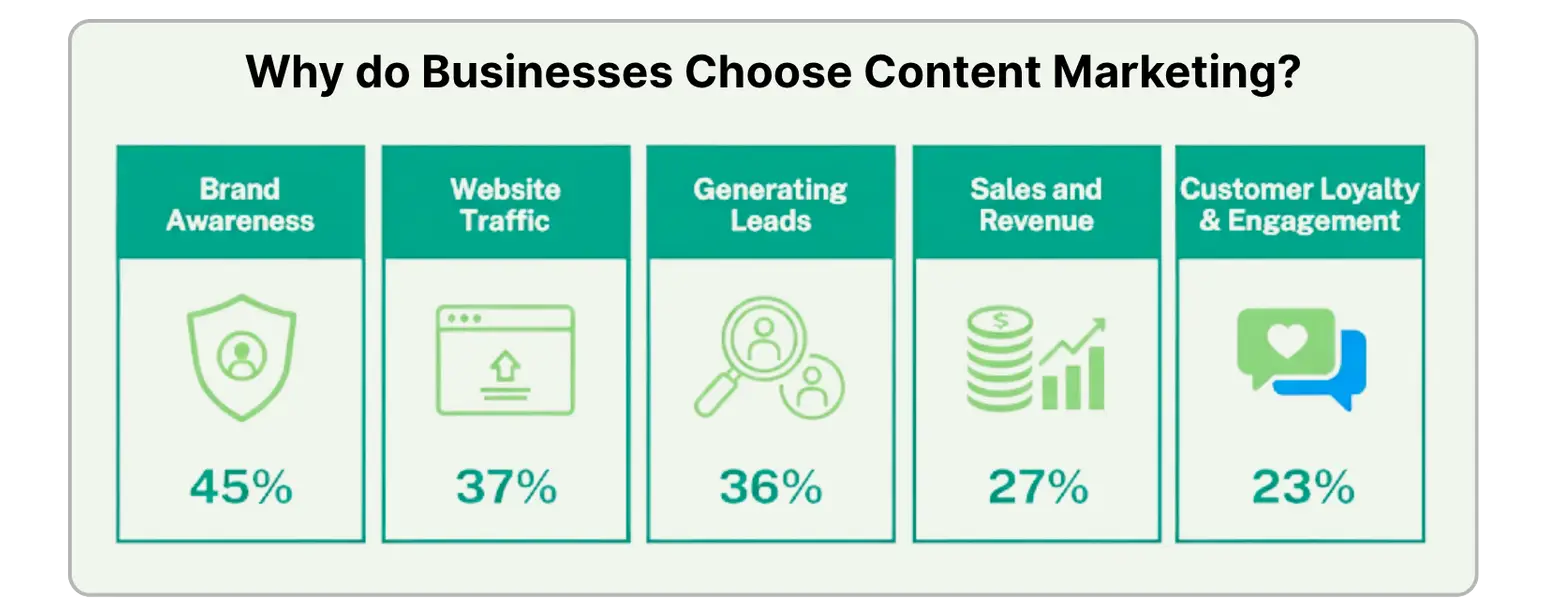
Builds Trust and Authority: Your audience believes you are an expert when you deliver helpful material helps to increase domain authority.
Builds Trust and Authority: Your audience believes you are an expert when you deliver helpful material helps to increase domain authority.
•
•
Improves SEO: Blogs, guides, and videos are useful to rank high on search engines with the appropriate keywords.
Improves SEO: Blogs, guides, and videos are useful to rank high on search engines with the appropriate keywords.
•
•
Generates Leads: Assistance tools such as eBooks or webinars are useful to motivate users to provide their contacts.
Generates Leads: Assistance tools such as eBooks or webinars are useful to motivate users to provide their contacts.
•
•
Strengthens Customer Relationships: Regular content keeps your brand top-of-mind.
Strengthens Customer Relationships: Regular content keeps your brand top-of-mind.
•
•
Cost-Effective: Unlike advertisements, which cease when you cease paying, good content does not cease and continues to generate traffic and leads as time goes on.
Cost-Effective: Unlike advertisements, which cease when you cease paying, good content does not cease and continues to generate traffic and leads as time goes on.
Key Elements of a Strong Content Marketing Strategy
Element
Element
Element
Element
Description
Description
Description
Description
Know Your Audience
Know Your Audience
Know Your Audience
Without knowing your audience, you cannot make valuable content. Detect their interests, pain points and goals. Such tools as Google analytics, surveys, and social media insights can come in handy.
Without knowing your audience, you cannot make valuable content. Detect their interests, pain points and goals. Such tools as Google analytics, surveys, and social media insights can come in handy.
Without knowing your audience, you cannot make valuable content. Detect their interests, pain points and goals. Such tools as Google analytics, surveys, and social media insights can come in handy.
Create Valuable Content
Create Valuable Content
Create Valuable Content
Your content must resolve or answer the questions of your audience. To illustrate, when you sell fitness gear, post fitness tips, health recipes or testimonials.
Your content must resolve or answer the questions of your audience. To illustrate, when you sell fitness gear, post fitness tips, health recipes or testimonials.
Your content must resolve or answer the questions of your audience. To illustrate, when you sell fitness gear, post fitness tips, health recipes or testimonials.
Diversify Content Formats
Diversify Content Formats
Diversify Content Formats
Various individuals have different tastes in the content. Combine blogs, videos, infographics, podcasts and social media posts to appeal to more people.
Various individuals have different tastes in the content. Combine blogs, videos, infographics, podcasts and social media posts to appeal to more people.
Various individuals have different tastes in the content. Combine blogs, videos, infographics, podcasts and social media posts to appeal to more people.
Optimize for SEO
Optimize for SEO
Optimize for SEO
Include pertinent keywords in an organic manner, create powerful meta titles and descriptions, and include alt text to images. This makes sure that your content is accessible to search engines.
Include pertinent keywords in an organic manner, create powerful meta titles and descriptions, and include alt text to images. This makes sure that your content is accessible to search engines.
Include pertinent keywords in an organic manner, create powerful meta titles and descriptions, and include alt text to images. This makes sure that your content is accessible to search engines.
Distribute Content Wisely
Distribute Content Wisely
Distribute Content Wisely
Don’t just publish and wait. Share on numerous platforms- social media, email newsletters, YouTube and collaborating with other websites.
Don’t just publish and wait. Share on numerous platforms- social media, email newsletters, YouTube and collaborating with other websites.
Don’t just publish and wait. Share on numerous platforms- social media, email newsletters, YouTube and collaborating with other websites.
Measure and Improve
Measure and Improve
Measure and Improve
Measures the performance based on such metrics as traffic, engagement, leads, and conversions. Modify your approach depending on the success of it.
Measures the performance based on such metrics as traffic, engagement, leads, and conversions. Modify your approach depending on the success of it.
Measures the performance based on such metrics as traffic, engagement, leads, and conversions. Modify your approach depending on the success of it.
Examples of Content Marketing in Action:
Examples of Content Marketing in Action:
•
•
HubSpot: Provides free guides, templates, and blogs that bring millions of users.
HubSpot: Provides free guides, templates, and blogs that bring millions of users.
•
•
Coca-Cola: Shares emotional stories and user-generated content to connect with audiences worldwide.
Coca-Cola: Shares emotional stories and user-generated content to connect with audiences worldwide.
•
•
Airbnb: Makes travel guides and experiences to make people book.
Airbnb: Makes travel guides and experiences to make people book.
These brands do not only sell, but they also involve, educate and inspire.
These brands do not only sell, but they also involve, educate and inspire.
Common Mistakes to Avoid
•
•
Being too promotional: Content should educate first, sell second.
Being too promotional: Content should educate first, sell second.
•
•
Inconsistent posting: Random publishing breaks trust and lowers visibility.
Inconsistent posting: Random publishing breaks trust and lowers visibility.
•
•
Ignoring analytics: Without measuring results, you won’t know what’s working.
Ignoring analytics: Without measuring results, you won’t know what’s working.
•
•
Not repurposing content: A blog post can also be a video, infographic, or social media thread.
Not repurposing content: A blog post can also be a video, infographic, or social media thread.
Final Thoughts
Content marketing does not involve one-off victories, instead, it is a long-term relationship. Through prevention of wasted value, you will get the right audience, build trust and grow the business in a sustainable manner. Keep in mind: today, the winning brands are the ones that teach, involve, and inspire, and not just sell. So, start small. Write a useful blog, make a brief video or a case study. Your audience will ultimately pay you back in loyalty and trust—and that is invaluable.
Content marketing does not involve one-off victories, instead, it is a long-term relationship. Through prevention of wasted value, you will get the right audience, build trust and grow the business in a sustainable manner. Keep in mind: today, the winning brands are the ones that teach, involve, and inspire, and not just sell. So, start small. Write a useful blog, make a brief video or a case study. Your audience will ultimately pay you back in loyalty and trust—and that is invaluable.
Frequently Asked Questions (FAQs)
Frequently Asked Questions
How often should I update my existing content?

Updating content regularly, at least once every 6–12 months is essential to keep information accurate, relevant, and competitive in search rankings. This ensures that your audience continues to see your brand as a trusted source.
Can content marketing work without a big budget?
You should expect a structured process that includes onboarding, goal setting, strategy development, regular communication, execution of campaigns, and performance reporting. A good agency will act as a partner collaborating with you to understand your business, crafting a custom plan, and keeping you informed about progress and results.
How can I make my content stand out in a crowded market?
Vanity metrics are data points that look impressive but don’t directly impact your bottom line, such as social media likes, page views, or email open rates. While they can indicate visibility, they’re not strong indicators of business success. What’s more important are actionable metrics like lead quality, conversion rate, and return on investment (ROI). Looking for more details? Contact us today before your competitors do.
Should I focus on one content format or diversify?
High traffic without conversions often points to deeper issues such as: Poor targeting (the wrong audience is visiting), weak calls-to-action or unclear messaging, website usability issues or slow load times, lack of trust signals (like reviews or security).
Your marketing should not just drive visits; it should drive the right visitors and guide them to act.
Can content marketing improve customer retention?
You’ll know it’s working when you see measurable progress toward your business goals, more qualified leads, better engagement, increased sales, or stronger ROI. Regular reports, clear KPIs, and consistent communication from your agency are key to evaluating success.
How often should I analyse content performance to improve strategy?
Organic marketing (like SEO, blogging, and social media engagement) often takes 3 to 6 months to start showing results and may take 6–12 months for significant impact. It builds trust and authority over time, and while slower than paid marketing, it often yields more sustainable growth.
How do I ensure my content appeals to both humans and search engines?
A good marketing report should cover: Key performance indicators (KPIs) tied to your goals, traffic and conversion data, campaign performance summaries, ROI or cost-per-lead/acquisition, insights and recommendations for improvement, clear next steps or action items.
It should be easy to understand, jargon-free, and focus on outcomes. Learn more—how we drive revenue?
How often should I update my existing content?
Updating content regularly, at least once every 6–12 months is essential to keep information accurate, relevant, and competitive in search rankings. This ensures that your audience continues to see your brand as a trusted source.
Can content marketing work without a big budget?
You should expect a structured process that includes onboarding, goal setting, strategy development, regular communication, execution of campaigns, and performance reporting. A good agency will act as a partner collaborating with you to understand your business, crafting a custom plan, and keeping you informed about progress and results.
How can I make my content stand out in a crowded market?
Vanity metrics are data points that look impressive but don’t directly impact your bottom line, such as social media likes, page views, or email open rates. While they can indicate visibility, they’re not strong indicators of business success. What’s more important are actionable metrics like lead quality, conversion rate, and return on investment (ROI). Looking for more details? Contact us today before your competitors do.
Should I focus on one content format or diversify?
High traffic without conversions often points to deeper issues such as: Poor targeting (the wrong audience is visiting), weak calls-to-action or unclear messaging, website usability issues or slow load times, lack of trust signals (like reviews or security).
Your marketing should not just drive visits; it should drive the right visitors and guide them to act.
Can content marketing improve customer retention?
You’ll know it’s working when you see measurable progress toward your business goals, more qualified leads, better engagement, increased sales, or stronger ROI. Regular reports, clear KPIs, and consistent communication from your agency are key to evaluating success.
How often should I analyse content performance to improve strategy?
Organic marketing (like SEO, blogging, and social media engagement) often takes 3 to 6 months to start showing results and may take 6–12 months for significant impact. It builds trust and authority over time, and while slower than paid marketing, it often yields more sustainable growth.
How do I ensure my content appeals to both humans and search engines?
A good marketing report should cover: Key performance indicators (KPIs) tied to your goals, traffic and conversion data, campaign performance summaries, ROI or cost-per-lead/acquisition, insights and recommendations for improvement, clear next steps or action items.
It should be easy to understand, jargon-free, and focus on outcomes. Learn more—how we drive revenue?




Turn Content into Your Most Powerful Growth Tool
Turn Content into Your Most Powerful Growth Tool
Strategic content builds trust, strengthens your brand's visibility & turns your audience into loyal customers over time.
Strategic content builds trust, strengthens your brand's visibility & turns your audience into loyal customers over time.
4.9/5 Ratings!
4.9/5 Ratings!
Share this article

Related Resources
Latest Blogs






Don’t miss our revenue growth tips!
Don’t miss our revenue growth tips!
Don’t miss our revenue growth tips!
Get expert marketing tips—straight to your inbox, like thousands of happy clients.
Get expert marketing tips—straight to your inbox, like thousands of happy clients.
Latest Blogs





















Ready to speak with an expert?
Data-Driven Marketing Agency That Elevates ROI
1100+
Websites Designed & Optimized to Convert
$280M+
Client Revenue Driven & Growing Strong
Discover how to skyrocket
your revenue today!


Trusted by 1000+ Owners!
Ready to speak with an expert?
Data-Driven Marketing Agency That Elevates ROI
1100+
Websites Designed & Optimized to Convert
$280M+
Client Revenue Driven & Growing Strong
Discover how to skyrocket
your revenue today!
Trusted by 1000+ Owners!
Want to skyrocket revenue?
4.9/5 Ratings!
Ready to speak with an expert?
Data-Driven Marketing Agency That Elevates ROI
1100+
Websites Designed & Optimized to Convert
$280M+
Client Revenue Driven & Growing Strong
Want to skyrocket
revenue?
Trusted by 1000+ Owners!
Call
Meet